
The United States announced a 25 per cent tariff on India as the White House released an expansive list of duties that Washington, DC will impose on exports from countries around the world.

Prices of thin flat screen televisions and monitors will come down as the government on Monday lowered the basic customs duty on LCD panels used in manufacturing of such electronic goods to five per cent from 10 per cent.
Unlike the finance ministry which takes a larger view, the commerce ministry only looks at exporters' interests.

The US Trade Representative noted that India's average applied tariff rate stood at 17% per cent, the highest of any major world economy.

'Additionally, the significant employment multiplier will boost direct and indirect jobs of up to 1.1 million.'
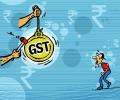
'We crossed Rs 1.7 trillion in three months this financial year.'

Finance Minister Nirmala Sitharaman also said that the government proposes to increase the benefit of carrying forward losses for startups to 10 years.

S&P Global Ratings on Wednesday said the impact of the US reciprocal tariff will be limited on India as the economy is domestically oriented with less reliance on exports. YeeFarn Phua, Director, Sovereigns and International Public Finance Ratings, Asia-Pacific S&P Global also said India will clock a 6.7-6.8 per cent GDP growth over the next two years.

The government is looking to plug loopholes in the Indian customs law provision that allows tax exemptions for gifts up to Rs 5,000 and trade samples up to Rs 10,000 sent to India from abroad.
Excise duty on formulations has increased from 4 per cent to 5 per cent.

Large trade deficit and rupee decline against the US dollar are putting pressure on the CAD, and these steps are likely to have a positive impact on the external sector.

Proposal to provide weighted deduction at 150 per cent of expenditure incurred on skill development in manufacturing sector.

A string of measures includes specific provisions in rules governing anti-dumping, safeguards, and basic Customs duties.

In 2015, India chemicals industry had a market size of $144 billion.

Excise duty on most products has been capped at 12.5 per cent

Do we have enough trained oncologists and medical professionals in India to man these over 4,500 beds in the public sector?

Select life saving drugs, LCD TVs, mobile phones, branded jewellery, sports and leather products, packaged software and footwear are among items that would cost less, while gold bars and coins, silver, set-top boxes and cosmetic surgery would turn costlier after the Budget.
If the United States has its way in the World Trade Organisation, Indians may soon be able to savour the famed Californian wine for a much lesser price.

Recently, the finance ministry waived off basic customs duty and health cess on imported oxygen and related equipment for three years.

Cooking gas or Liquified Petroleum Gas (LPG) price has been raised by Rs 50 per cylinder by distribution companies, Union Oil Minister Hardeep Singh Puri said on Monday.

Mobile handsets could be marginally cheaper with the Finance Minister today announcing tax exemptions for chargers, batteries and accessories.

Union budget was mildly for cable broadcasting industry and DTH.
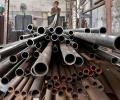
India's leading steel companies hope the Modi 3.0 Budget will continue the massive capital expenditure currently underway, focusing on infrastructure development, manufacturing, and fair trade. The infrastructure segment is the largest steel user, and the government's focus has fuelled steel consumption even as international markets have underperformed. According to provisional statistics, steel consumption grew 13.6 per cent in FY24, reaching 136 million tonnes (mt), according to a CRISIL report.

Most investors should have a 5% to 10% allocation to gold for diversification. They should stagger their investments to mitigate timing risk.

The impact of fiscal measures announced by the government to contain inflation will be seen in the next few months because of the base effect, reports Indivjal Dhasmana.
Oil and gas exploration policy will be reviewed to move from profit sharing to revenue sharing contracts.
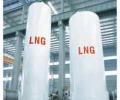
Natural gas/Liquefied Natural Gas imported for power generation by a power generation company is being fully exempted from basic customs duty Budget provisions.

Urban markets account for the major share of total revenues.

It appears that the focus of commerce minister Anand Sharma, when he unveils the new foreign trade policy, will be to eliminate unnecessary paperwork and thereby help reduce transaction costs for exporters, while retaining the basic framework of the present FTP.

Union Budget 2013-14 was positive for the Aluminium products sector.

5 MMTPA LNG terminal in Dabhol will be fully operational in 2013-14

The move will primarily impact luxury car companies like Mercedes Benz, BMW, Audi and Volvo and bike brands like Triumph and Harley Davidson.
This will also give an impetus to the National Manufacturing Policy.
Petroleum subsidy for 2013-14 budget estimates is Rs 64,998 crore.
None of the demands of the industry were met.

On the flipside, since 60-70 per cent of the costs pertain to raw material, which are mostly imported, currency fluctuation is a key risk for the segment.

The government should bring natural gas under the Goods and Services Tax (GST) regime to realise Prime Minister Narendra Modi's vision for a gas-based economy and raising the share of the environment-friendly fuel in India's energy basket, an industry body that represents the likes of Reliance Industries as well as state-owned firms, has said. Natural gas is currently outside the ambit of GST, and existing legacy taxes -- central excise duty, state VAT, central sales tax -- continue to be applicable on the fuel. In its pre-Budget memorandum to the finance ministry, Federation of Indian Petroleum Industry (FIPI), which boasts of members from across the oil and gas spectrum, also demanded rationalisation of GST on transportation of natural gas through pipeline as well as on re-gasification of imported LNG to help bring down cost of the environment friendly fuel.
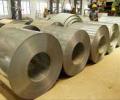
The steel sector has plenty to cheer in the Budget 2012-13, as it has proposed increasing the import duty on flat-rolled steel to 7.5 per cent and reducing duty on plant and machinery imports for iron ore beneficiation to 2.5 per cent.
The excise authorities of some states are playing spoilsport by subjecting imported beverages to the same levies as the domestic drop without application of mind.
 © 2026 Rediff.com - Advertise with us - Disclaimer - Privacy Policy - Sitemap - Feedback - About us - Terms of use - Grievances